
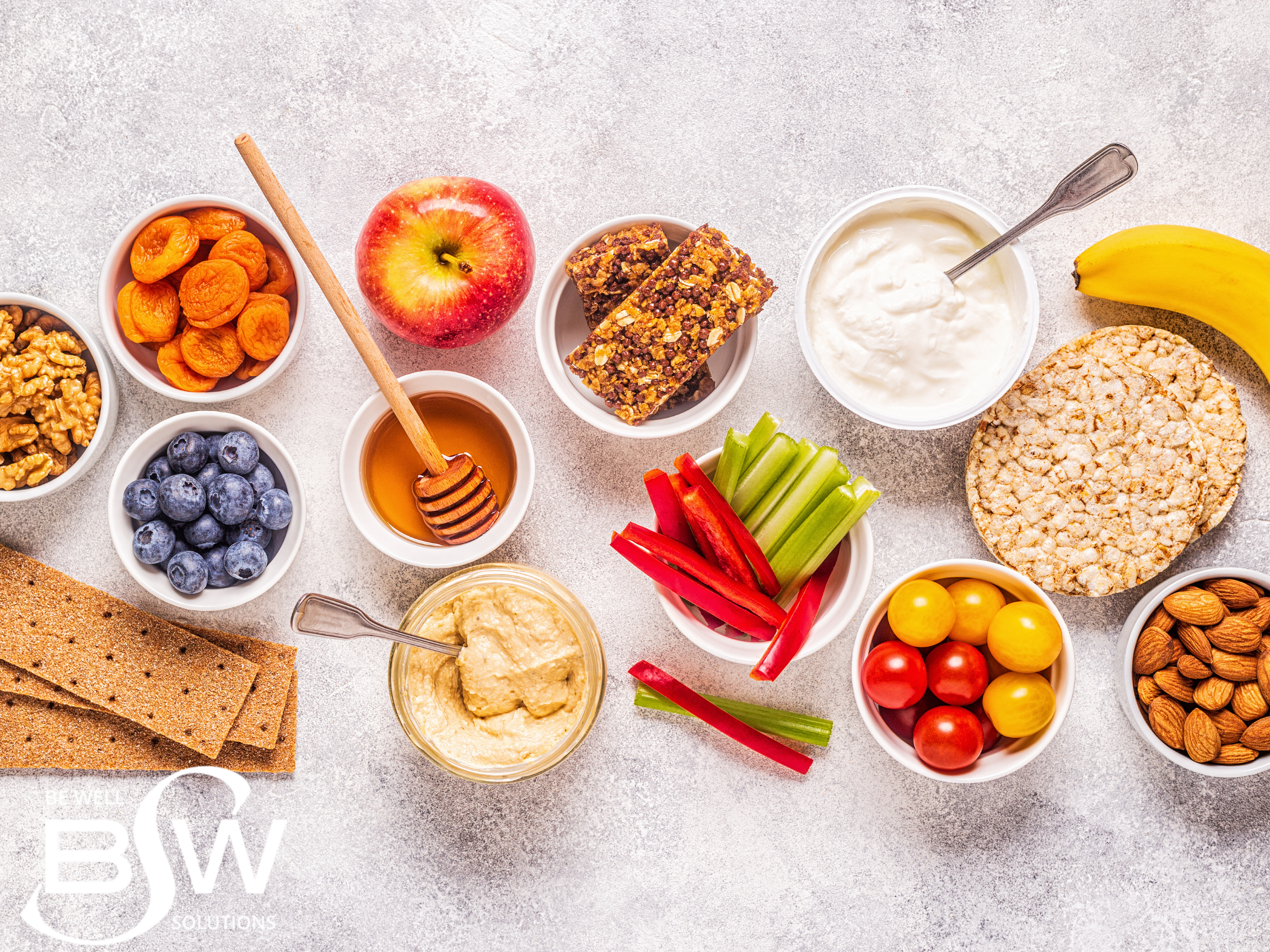
Busy schedules often make it tempting to skip meals or grab whatever food is most convenient. Unfortunately, many quick snack foods are high in added sugar, sodium, and unhealthy fats, which can lead to energy crashes and increase hunger later in the day. Choosing nutrient-packed snacks or small mini meals instead can help you stay energized, focused, and satisfied until your next meal.
Why Smart Snacking Matters
A well-balanced snack does more than curb hunger. It provides your body with nutrients that support brain function, muscle health, and steady energy levels. Research from the Academy of Nutrition and Dietetics suggests that pairing carbohydrates with protein or healthy fats helps slow digestion, keeping blood sugar more stable than eating carbohydrates alone. Stable blood sugar can help improve concentration, mood, and energy throughout the day.
Snacks can also help people meet their daily nutrition needs. According to the Dietary Guidelines for Americans, many adults and children do not consume enough fiber, calcium, potassium, or vitamin D. Choosing snacks that include fruits, vegetables, whole grains, dairy, nuts, or seeds can help fill these nutritional gaps.
Build a Better Snack
A satisfying snack usually includes at least two of the following:
- Protein to help keep you full longer.
- Fiber-rich carbohydrates for lasting energy.
- Healthy fats to support heart and brain health.
Aim for snacks that contain about 150 to 300 calories, depending on your activity level and how long it will be until your next meal.
Smart Snack Ideas
Try these easy combinations that require little preparation:
- Apple slices with natural peanut butter
- Greek yogurt topped with berries and chopped walnuts
- Whole-grain crackers with cheese
- Baby carrots, cucumber slices, and hummus
- Cottage cheese with pineapple or peaches
- A handful of unsalted almonds with a piece of fresh fruit
- Hard-boiled eggs with whole-grain toast
- Trail mix made with unsalted nuts, seeds, and dried fruit
- Roasted chickpeas
- A smoothie made with milk, frozen fruit, and plain Greek yogurt
These options provide a mix of protein, fiber, vitamins, and minerals that help you stay full and energized.
Think Beyond Traditional Snacks
Sometimes you need more than a snack. A mini meal can be a great option when you have several hours before your next meal or when you’re replacing a skipped breakfast or lunch.
Simple mini meals include:
- A turkey and vegetable wrap on a whole-grain tortilla
- Brown rice topped with grilled chicken and steamed vegetables
- A salad with beans, grilled chicken, and olive oil vinaigrette
- Whole-grain toast with avocado and a hard-boiled egg
- Leftover grilled salmon with roasted vegetables
Mini meals provide a balanced combination of carbohydrates, protein, and healthy fats to help maintain energy throughout the day.
Plan for Success
Healthy choices become easier when you prepare ahead of time.
- Wash and portion fruits and vegetables after grocery shopping.
- Keep healthy snacks at work, in your car, or in your backpack.
- Prepare homemade trail mix or portion nuts into small containers.
- Stock your refrigerator with yogurt, cheese sticks, and hard-boiled eggs.
- Read Nutrition Facts labels and choose products with less added sugar and sodium whenever possible.
Planning reduces the temptation to rely on vending machines or fast food when hunger strikes.
Smart snacking is not about eating more; it’s about eating better. Choosing foods that combine protein, fiber, and healthy fats can help improve energy, support concentration, and keep you feeling satisfied between meals. With a little planning, nutritious snacks and mini meals can become an easy part of even the busiest day.
Continue Reading September 2026 Newsletter: Boundaries for Better Balance: Protecting Your Time and Energy