
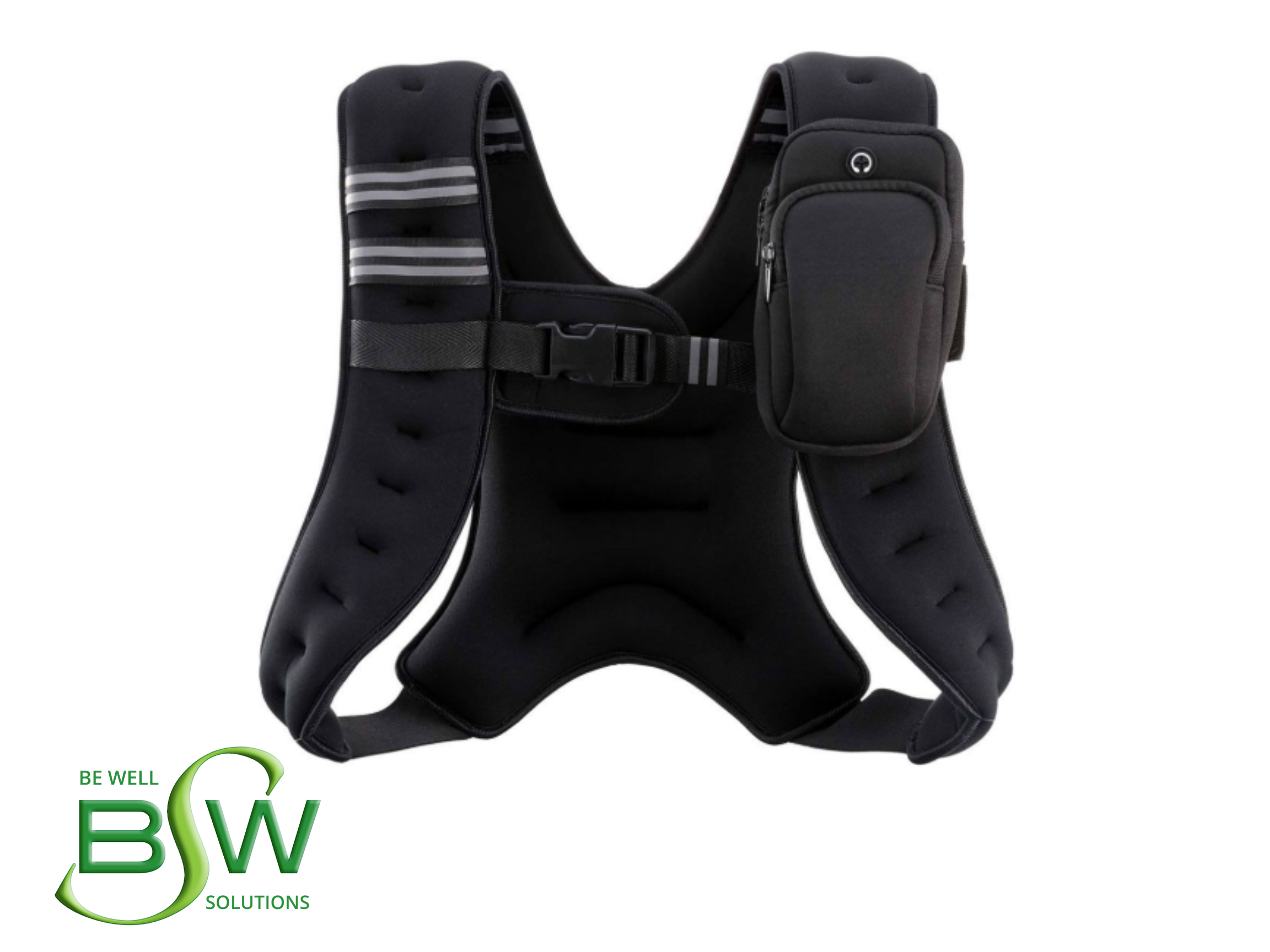
Trends come and go in the fitness industry, making it difficult to navigate what is worthwhile and beneficial. A recent trend includes wearing a weighted vest for exercise. This is often referred to as rucking. While this training tactic originated from military training to build strength and endurance, it has now become a mainstream physical activity. Weighted vests can add intensity to workouts, but they are not necessarily the best option for every exerciser. We’ll take a closer look at the pros and cons to help you decide if this is the right trend for you and your workout routine.
The Pros
The use of a weighted vest during exercise increases the workload and resistance of the activity being performed. It adds intensity that is higher than using your body weight alone. This elevated workload will increase energy expenditure and result in a slight rise in calorie burn. Over time, training with a weighted vest improves strength and endurance as your body adapts to using more resistance. When additional weight is added to weight-bearing exercises like walking, hiking, and jogging, it increases the load on your skeletal system. Research has shown that an increased load on the skeletal system during weight-bearing exercises can help maintain and improve bone mass, which in turn will aid in managing and preventing conditions like osteoporosis (Atlantic Health1). The use of a weighted vest for activities such as squats, lunges, and walking can improve overall balance. The benefits are numerous when the vest is fitted correctly and used appropriately.
The Cons
Several factors should be considered before adding a weighted vest to your workout routine. Since this exercise equipment increases the workload and intensity, it is not necessarily recommended for beginners. If proper precautions are not taken, there can be an increased risk of injury. Special attention should be given to ensure the vest fits properly, is used correctly, and contains the appropriate amount of weight for the individual. Exercisers with preexisting conditions such as arthritis or hypertension should consult a physician and exercise professional before incorporating a weighted vest, as these health conditions can be exacerbated by increased exercise output, heavier workloads, and improper use. While typical uses include activities such as walking and hiking, it is not intended for every activity. Exercises that require bending, rotating, or quick movements are not always the best fit for a weighted vest. During these activities, added weight can throw off balance, stability, and proper form, which increases the risk of injury.
The Bottom Line
The concept of weighted vests is not entirely new to exercise, but the trend is certainly gaining steam. Thankfully, research has shown that overall results can be mostly positive with beneficial outcomes. However, to avoid unnecessary injury, individuals should take the proper precautions and consider their own health and activity level before incorporating it into an exercise routine. Discuss the use of a weighted vest with your doctor to account for the additional resistance and workload. Then, consider working with an exercise professional to ensure appropriate fit and proper use.
Always consult with your physician before starting a new exercise program.
Continue Reading April 2026 Newsletter: 4 Ways to Combat Digital Stress